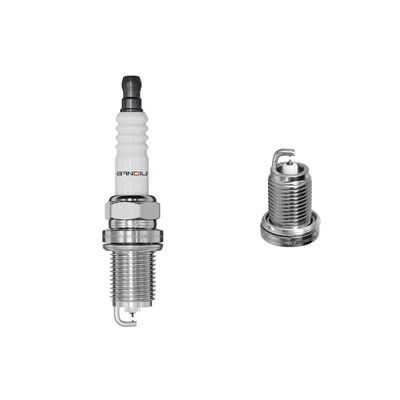
In the world of automotive performance, enthusiasts are constantly on the lookout for ways to squeeze every last drop of horsepower from their engines. One component that often comes under scrutiny is the spark plug. As a leading supplier of performance spark plugs, I've encountered numerous inquiries about whether these specialized spark plugs can truly increase horsepower. In this blog post, we'll delve into the science behind spark plugs, their role in engine performance, and whether performance spark plugs are a worthy investment for boosting horsepower.
The Basics of Spark Plugs
Before we explore the potential impact of performance spark plugs on horsepower, let's first understand how spark plugs work. A spark plug is a crucial component of an internal combustion engine, responsible for igniting the air-fuel mixture in the combustion chamber. When the piston reaches the top of its compression stroke, the spark plug delivers an electrical spark, which ignites the compressed mixture, creating a controlled explosion that forces the piston back down and drives the engine.
The two main types of spark plugs commonly used in automotive engines are conventional (copper) spark plugs and performance spark plugs. Conventional spark plugs are made with a copper core electrode and a nickel alloy outer shell. They are relatively inexpensive and offer reliable performance under normal driving conditions. Performance spark plugs, on the other hand, are designed with advanced materials and technologies to provide a more efficient and powerful spark, potentially improving engine performance.
How Performance Spark Plugs Differ
Performance spark plugs differ from conventional spark plugs in several key ways:
- Electrode Materials: Performance spark plugs often feature electrodes made from precious metals such as platinum, iridium, or nickel. These materials offer superior heat resistance, durability, and conductivity compared to copper, allowing for a more efficient and consistent spark. For example, our Nickel Spark Plug BCP6E', 'V - Line 17', 'VL17 6237 is crafted with high - quality nickel to ensure optimal performance.
- Electrode Design: The design of the electrode can also have a significant impact on spark performance. Performance spark plugs may feature a finer electrode tip or a unique shape, which can reduce the amount of voltage required to create a spark and improve ignition efficiency.
- Insulator Technology: Advanced insulator materials and designs are used in performance spark plugs to prevent electrical leakage and improve heat dissipation, ensuring reliable operation even under extreme conditions.
Can Performance Spark Plugs Increase Horsepower?
The question of whether performance spark plugs can increase horsepower is not a straightforward one. In theory, a more efficient and powerful spark can lead to better combustion of the air - fuel mixture, which in turn can increase engine power and torque. However, the actual increase in horsepower will depend on several factors:
- Engine Condition: If an engine is in good condition and already operating at peak efficiency, the potential increase in horsepower from upgrading to performance spark plugs may be minimal. On the other hand, if the engine has ignition problems, such as misfires or incomplete combustion, performance spark plugs can help to correct these issues and restore lost power.
- Driving Conditions: For everyday driving, the difference in performance between conventional and performance spark plugs may not be noticeable. However, in high - performance applications, such as racing or towing, where the engine is under heavy load, performance spark plugs can provide a more consistent spark and improve throttle response, potentially resulting in a small increase in horsepower.
- Engine Modifications: In engines that have been modified with aftermarket components such as a cold air intake, performance exhaust system, or engine tuning, performance spark plugs can work in conjunction with these upgrades to optimize engine performance and potentially increase horsepower.
Scientific Evidence
Numerous studies have been conducted to evaluate the impact of performance spark plugs on engine performance. While some studies have shown modest increases in horsepower and torque, others have found little to no difference. However, it's important to note that the results of these studies can vary depending on the type of engine, the specific spark plugs used, and the testing conditions.
One study conducted on a late - model car engine found that upgrading to platinum - tipped performance spark plugs resulted in a 2 - 3% increase in horsepower and a 1 - 2% increase in torque. Another study on a high - performance racing engine showed a more significant improvement, with an increase of up to 5% in horsepower and torque.
Real - World Examples
Let's take a look at some real - world examples of how performance spark plugs have affected engine performance. A car enthusiast who upgraded the spark plugs in his naturally aspirated engine from conventional copper plugs to our Nickel Spark Plug R5674 - 8 2374 noticed a smoother idle, better throttle response, and a slight increase in acceleration. He attributed these improvements to the more consistent spark provided by the performance spark plugs.


A professional racing team also reported positive results after switching to performance spark plugs. They found that the engine ran more smoothly at high RPMs, and they were able to achieve slightly faster lap times. The team's mechanic explained that the advanced materials and design of the performance spark plugs allowed for more efficient combustion, which translated into better overall performance on the track.
Other Benefits of Performance Spark Plugs
Even if the increase in horsepower is not significant, performance spark plugs offer several other benefits that make them a worthwhile investment:
- Improved Fuel Efficiency: A more efficient spark can lead to better combustion of the air - fuel mixture, which can result in improved fuel economy. By burning fuel more completely, performance spark plugs can help to reduce fuel waste and save money at the pump.
- Longer Lifespan: The precious metal electrodes used in performance spark plugs are more resistant to wear and corrosion compared to copper electrodes. This means that performance spark plugs can last longer, reducing the need for frequent replacements and maintenance.
- Enhanced Reliability: Performance spark plugs are designed to operate under extreme conditions, making them more reliable than conventional spark plugs. They are less likely to experience misfires or other ignition problems, ensuring consistent engine performance.
Making the Decision
When deciding whether to upgrade to performance spark plugs, it's important to consider your specific needs and driving habits. If you're a casual driver who mainly uses your vehicle for commuting and everyday driving, the benefits of performance spark plugs may not be worth the additional cost. However, if you're a performance enthusiast or use your vehicle for high - performance applications, such as racing or towing, the potential increase in horsepower, along with the other benefits, may make performance spark plugs a smart investment.
If you're still unsure whether performance spark plugs are right for your engine, our team of experts is here to help. We can provide you with personalized recommendations based on your vehicle's make, model, and engine specifications.
Contact Us for Your Spark Plug Needs
If you're interested in exploring our range of performance spark plugs, such as the Nickel Spark Plug BKR4EY 1162, and other top - quality products, we encourage you to contact us. Our experienced team is ready to assist you in finding the perfect spark plugs for your engine. Whether you're looking to enhance horsepower, improve fuel efficiency, or simply want a more reliable ignition system, we have the solutions you need.
References
- Heywood, John B. "Internal Combustion Engine Fundamentals." McGraw - Hill Education, 1988.
- Taylor, Colin R. "The Internal Combustion Engine in Theory and Practice: Volume I, Thermodynamics, Fluid Flow, Performance." The MIT Press, 1985.
- National Highway Traffic Safety Administration. "Fuel Economy and Environment."