

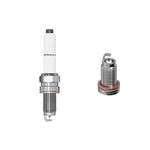
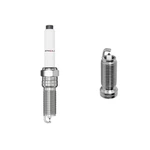
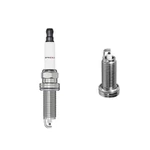
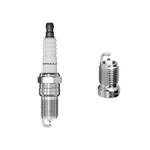
Double Iridium Spark Plug
Huangshan BANQIU Auto Parts Manufacturing Co., Ltd.
7x24h Production & Delivery Network

29000㎡
Factory Area
68M
Annual Output
100+
Export Countries
500+
Overseas Distributors
OEM / ODM / OBM Customization Service
BANQIU provides flexible OEM, ODM and OBM services for global B2B customers. We can develop and supply spark plugs according to your technical requirements, market positioning, packaging needs or sample references.
Customization Options:
1.Brand logo printing
2.Private-label color box design
3.Neutral packaging
4.Part number and cross-reference matching
5.Electrode structure customization
6.Heat range selection
7.Resistance value adjustment
8.Barcode, carton mark and export packaging
9.Product catalog and marketing material support
10.Inspection report support before shipment
OEM / ODM Cooperation Process
1. Send your part number list, vehicle application or sample photo
2. BANQIU checks model compatibility and recommends suitable products
3. Confirm technical details, packaging design and order quantity
4. Sample confirmation before mass production
5. Bulk production and quality inspection
6. Export packing, shipment and after-sales support
| Double Iridium |
|
OVER 100,000 KM | 2454°C |


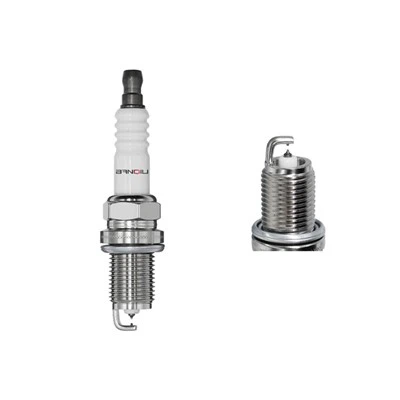
Double Iridium Is More Than Two Precious-Metal Tips.
Long-term spark plug performance is a systems-engineering challenge. The firing-end electrode material and geometry influence erosion resistance, while the ceramic insulator, seals, resistor, heat range and dimensional accuracy all contribute to the performance of the complete spark plug.
Application comes first:Electrode material does not replace OE application verification. Thread size, reach, seat type, heat range, gap, resistance and spark position must all suit the target engine.
Double Iridium Electrode Construction & Operating Principle
During a gasoline engine ignition cycle, the ignition coil develops sufficient voltage to break down the gas between the center and ground electrodes. This forms a discharge channel and ignites the nearby air–fuel mixture. The electrodes must withstand repeated electrical erosion, thermal cycling and combustion-chamber exposure.
Why Does Wear Resistance Matter on Both Firing Surfaces?
An ignition discharge occurs between two opposing electrodes. Repeated localized heating, arc erosion and material transfer may gradually round their edges, recess the contact surfaces and enlarge the spark gap. If only the center electrode has a precious-metal wear-resistant tip, wear of the conventional-alloy ground electrode remains an important factor in the overall service life.
A double iridium design extends wear-resistant material to both principal firing contacts, with the aim of reducing erosion and improving long-term gap retention. Ignition performance also depends on electrode geometry, heat range, in-cylinder pressure and the ignition system.
| Comparison | Single Iridium | Iridium–Platinum | Double Iridium |
|---|---|---|---|
| Center-electrode firing surface | Iridium-based material | Iridium-based material | Iridium-based material |
| Ground-electrode firing surface | Often nickel alloy; varies by model | Platinum-based contact pad | Iridium-based contact pad |
| Primary design focus | Center-electrode firing characteristics | Long-life dual-precious-metal design | Wear resistance on both iridium-based firing surfaces |
| Interchangeability | Never substitute on electrode material alone; full OEM specifications and application requirements must match |
This table summarises general design categories. Confirm the electrode material specification of both firing surfaces for the specific model before final classification.
Long-Term Durability: Limiting Electrode Erosion and Gap Growth
As firing cycles accumulate, the center and ground electrode surfaces can gradually round off or recede, widening the spark gap. A larger gap generally requires higher breakdown voltage, which can increase the demand on the ignition system and the risk of misfire under high cylinder pressure, weakened coil performance or unfavorable mixture conditions.
Iridium’s high melting point and the high-temperature erosion resistance of selected iridium-based alloys provide a material foundation for durable electrode designs. Actual wear also depends on alloy formulation, tip geometry, welding integrity, temperature and engine operating conditions; metal melting point alone cannot predict service mileage.
When the firing gap remains within its specified range over time, the electrodes are generally better able to maintain the intended ignition conditions. This does not mean that every engine will gain horsepower or use less fuel simply by installing double iridium plugs.
How Should Material Properties Be Interpreted?
2454°C is a commonly citedreference melting point for pure iridium; real-world plugs often use iridium-based alloys, welded tips and multi-material assemblies. Electrodes do not operate continuously at this temperature, and the melting point does not define the allowable engine operating temperature.
Heat Range, Spark Gap & Ignition Conditions: Three Different Concepts
Heat Range Controls Heat Dissipation
A spark plug’s heat range describes how the firing end transfers heat to the cylinder head. It is not the spark temperature, power output or spark intensity. A hotter plug generally retains more heat at the firing end, while a colder plug transfers heat away faster.
Spark Gap Affects Breakdown Voltage
Electrode gap, in-cylinder pressure, gas composition and electrode geometry all influence the voltage required for breakdown. Excessive gap can contribute to misfires; an undersized gap may also depart from engine design requirements.
Spark Position Determines Combustion-Chamber Fit
The position of the firing end relative to the shell and cylinder head must match the original engine geometry. Incorrect projection may affect combustion or cause mechanical interference and should never be selected by appearance alone.
What Happens When the Heat Range Is Incorrect?
Plug too cold:The firing end may remain below its effective self-cleaning temperature, increasing the risk of carbon fouling, electrical leakage and unstable ignition.
Plug too hot:The firing end may experience excessive thermal loading, potentially leading to electrode erosion, insulator damage or pre-ignition risk.
Comparing different brands:Heat-range numbers are not necessarily defined on the same scale across manufacturers. Do not infer interchangeability simply because the numbers match or differ by one. Verify reliable cross-reference information and the specific engine application.
Ten Technical Specifications Every International Buyer Should Verify
When choosing double iridium spark plugs, a similar appearance or a thread that screws in does not establish compatibility. Verify the OE reference, measured dimensions, heat range and spark position as one complete application package.
| Parameter / English Term | Why It Matters | What to Verify Before Ordering |
|---|---|---|
| Thread Size | Diameter and pitch determine cylinder-head fit | Thread diameter and pitch must match OE specifications |
| Thread Reach | Controls installation depth and combustion-chamber position | Verify effective reach and mounting geometry |
| Hex Size | Determines socket compatibility and service access | Check across-flats dimension and socket clearance |
| Heat Range | Controls firing-end temperature and heat-transfer balance | Verify by OE application; brands’ numeric scales are not directly interchangeable |
| Electrode GAP | Influences breakdown voltage and discharge position | Check factory setting, tolerance and vehicle requirements |
| Insulator Projection | Influences firing-end temperature and chamber clearance | Check OE geometric dimensions |
| Electrode Projection | Influences exposure of the firing end in the chamber | Check full tip geometry and mechanical clearance |
| Spark Position | Locates the discharge relative to the seating reference surface | Verify against the model drawing and its measurement definition |
| Seat Type | Gasket and tapered seats use different sealing geometries | Never replace a seat type merely because electrode materials match |
| OE Reference | Provides a traceable OEM application basis | Supply the complete OE number and engine/vehicle details; mark unsupported items “Unconfirmed” |
Also verify resistor specification, terminal configuration, thread surface finish and prescribed installation torque before placing the order.
Double Iridium Reliability Depends on the Entire Manufacturing Process.
BANQIU manufacturing covers ceramics, electrode welding, sealing, precision metal components and corrosion protection. For double iridium spark plugs, the bond strength of the two precious-metal contacts is only one element; electrical properties, thermal management and dimensional consistency must also be controlled.
Electrode Materials & Processing
Select iridium-based firing tips and supporting materials for each model, and control critical dimensions, tip shape and material-batch consistency.
Precision Welding & Joint Integrity
The location, integrity and finished geometry of precious-metal tip joints influence long-term durability and should be inspected according to process requirements.
Ceramic Insulator Components
Focus on electrical insulation, mechanical strength and surface defects to reduce high-voltage leakage and breakage risks.
Resistor & Internal Assemblies
Control the consistency of resistor and ceramic-component processes through appropriate resistance and connection inspections.
Metal Shell & Sealing
Thread dimensions, seating surfaces, shell corrosion protection and internal/external seals all contribute to reliable long-term installation.
Gap & Finished-Product Inspection
Inspect electrode gap, relative position, appearance, electrical properties and product identification against the model drawing.


From Manufacturing Process Control to Laboratory Validation
Premium spark plug quality cannot be established by a single spark-discharge check. Dimensional accuracy, electrical resistance, insulation, durability, thermal shock, corrosion and mechanical joints should be evaluated through a layered program that distinguishes in-line checks, in-process sampling and laboratory testing.
Every test should identify itstest article, method, sample size, conditions, acceptance criteria and batch record. Only then can the result serve as verifiable quality evidence for importers.
This is the recommended technical validation checklist. Test scope, acceptance thresholds and available reports are confirmed against the relevant product model and order specification.

| Inspection Stage | Key Checks | Technical Objective | Suggested Evidence for Buyers |
|---|---|---|---|
| Incoming Materials & Components | Electrode materials, ceramic components, resistor elements | Reduce material-batch variation and component-defect risk | Incoming material/component inspection records |
| In-Process Control | Weld position, structural dimensions, resistance checks | Verify control of critical operations | Process control records and engineering drawings |
| Finished-Product Function | GAP, appearance, electrical tests, spark discharge | Verify function and consistency before shipment | Final inspection report |
| Laboratory Validation | Thermal shock, salt spray, endurance, vibration | Evaluate resistance under defined test conditions | Test report with operating conditions |
| Batch Traceability | Part number, batch code, packaging labels | Support after-sales investigation and quality tracking | Batch coding rules |


Diagnosing Spark Plug Failures: Observe Symptoms, Then Identify Root Causes
The condition of a spark plug can provide clues about combustion, but a single visual symptom rarely proves a manufacturing defect. Common field findings include carbon fouling, oil deposits, overheating, electrical leakage and insulator abnormalities.
| Appearance / Symptom | Possible Contributing Causes (Not Exhaustive) | Recommended Investigation |
|---|---|---|
| Dry Black Carbon Fouling | Rich mixture, repeated short trips at low operating temperature, unsuitable heat range, etc. | Fuel system, operating temperature, heat range and service history |
| Wet Oil Fouling | Engine oil entering the combustion chamber; engine wear or sealing problems | Valve stem seals, piston rings and cylinder condition |
| Electrode Erosion or Enlarged GAP | Accumulated wear, extended service, excessive temperature or incorrect application | Mileage, measured gap, ignition voltage and thermal loading |
| Cracked Insulator | Abnormal installation force, mechanical impact, overheating or abnormal combustion | Tools, torque, seating geometry and possible chamber interference |
| Overheating / Pre-Ignition Risk | Cooling issues, ignition timing, unsuitable heat range or combustion abnormalities | Cooling, air–fuel mixture, ignition system and engine calibration |
| Brown Corona Staining on External Ceramic | High-voltage field attracting airborne particles; not necessarily combustion-gas leakage | Look for corroborating breakdown or leakage evidence; do not diagnose by color alone |
Precision Electrodes Require Correct Installation
Verify the Application
Check the OE reference, thread, seat, heat range, spark position and factory gap. Do not substitute based on visual similarity.
Inspect Appearance & GAP
Check that shipping has not damaged the insulator or precious-metal tips. Use appropriate gauges and avoid pressing against fine iridium tips.
Clean the Installation Area
Inspect the cylinder-head threads and seat; prevent debris from entering the cylinder or compromising the seal.
Start the Thread by Hand
Where access permits, start the plug by hand to reduce the risk of cross-threading.
Tighten to the Specified Torque
Follow the vehicle service manual and the instructions for the exact spark plug model. Both excessive and insufficient torque can cause problems.
Recheck the Ignition System
Check high-voltage connections, ignition coils, insulation and combustion-chamber conditions; investigate the complete system when abnormal operation occurs.
Build a Sustainable Double Iridium Product Range for Global Importers
BANQIU supplies double iridium spark plugs and supports cooperation around vehicle coverage, specification confirmation, packaging and bulk delivery for target markets. For international buyers, supply reliability and accurate application data are as important as electrode material.
Provide target brands, OE numbers, vehicle applications, quantities and destination markets.
Verify heat range, gap, dimensions, electrode construction, seat type and sample requirements.
Approve OEM/ODM brand printing, individual boxes, barcodes, labels and export cartons.
Confirm the order, inspection requirements, lead time, batch traceability and export arrangements.
Provide the Following Information for a More Accurate Quotation

Double Iridium Spark Plug – Technical FAQ
What Is the Difference Between Double Iridium and Single Iridium Spark Plugs?
Double iridium plugs use iridium-based material on the main firing contact surfaces of both the center and ground electrodes; single iridium plugs generally use it on the center electrode only. The difference relates to the materials and wear-resistant design of both firing surfaces—not a doubling of spark power.
Are Double Iridium and Iridium–Platinum the Same?
No. Iridium–platinum designs generally pair an iridium-based center electrode with a platinum-based ground contact, while double iridium uses iridium-based firing contacts on both sides. Check model-specific drawings to verify the actual material construction.
Do Double Iridium Plugs Always Last Longer Than Single Iridium Plugs?
Wear-resistant contacts on both electrodes can reduce erosion in certain designs, but service life also depends on engine operation, contact geometry, welding and heat transfer. A universal lifespan multiplier cannot be inferred from the label “double iridium.”
Does the 100,000+ km Service-Life Figure Constitute a Warranty?
No. We present more than 100,000 km as a reference service-life positioning for double iridium technology. Actual service intervals depend on the vehicle and product requirements. Warranty terms are separate from lifespan positioning and must be confirmed in the sales agreement.
Does Iridium’s 2454°C Melting Point Mean That the Plug Operates at This Temperature?
No. 2454°C is a reference melting point for pure iridium, not the normal firing-end temperature and not a complete durability specification for iridium-based alloys.
Can I Replace an Original Nickel Spark Plug with a Double Iridium Model?
Only when critical parameters match—including thread, reach, seat type, heat range, gap, resistance, spark position and OE fitment—can an appropriate double iridium alternative be considered. Upgrading the electrode material alone does not establish compatibility.
Can Heat-Range Numbers from Different Brands Be Compared Directly?
No. Heat-range scales are not necessarily the same across brands. Confirm compatibility using reliable cross-reference part numbers, OE applications and complete technical specifications rather than numeric equality or a one-step difference.
Why Might Required Ignition Voltage Increase with Service Time?
As firing surfaces erode, electrode edges can become blunter or the gap can increase, generally raising the voltage needed to achieve gas breakdown. Cylinder pressure, gas composition and ignition-system condition also matter.
Should I Adjust the Factory-Set Electrode Gap?
First verify the exact model and OE requirements. Levering or striking fine-wire precious-metal electrodes can damage the tip or weld. Only adjust with specified tools and methods when the product instructions expressly permit it.
Does BANQIU Offer OEM/ODM, Wholesale and Custom Packaging?
BANQIU can review part numbers and provide branding and packaging customization as part of a project. MOQ, price, supply scope, application approval and sample arrangements must be confirmed against your order requirements.
Make Double Iridium Sourcing
A Decision Based on Verifiable Engineering.
Share your OE references, estimated quantities, destination market and private-label packaging requirements. We recommend confirming critical fitment dimensions, double iridium material construction and sample testing needs at the quotation stage.
Company
Huangshan BANQIU Auto Parts Manufacturing Co., Ltd.
Sales Email
global@banqiusparkplug.com
Official Website
www.banqiusparkplug.com
Request a Double Iridium Spark Plug Quote
Include the details below in your inquiry so that electrode construction, fitment dimensions and sample testing can be confirmed before quotation.
You can also email global@banqiusparkplug.com directly.