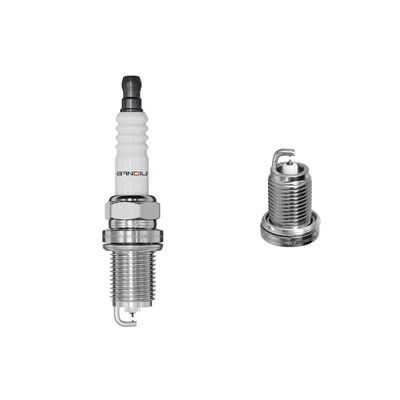
In the world of turbocharged cars, maintaining optimal engine performance is crucial. One of the key components that can significantly impact engine efficiency is the oil spark plug. A faulty oil spark plug can lead to a range of issues, from reduced power and fuel economy to more severe engine damage. As a trusted Oil Spark Plug Turbo supplier, I often receive questions from car enthusiasts and mechanics about diagnosing oil spark plug problems without removing them. In this blog post, I'll explore the possibilities and limitations of such diagnostic methods.
Understanding the Role of Oil Spark Plugs in Turbo Cars
Before delving into diagnostic methods, it's essential to understand the function of oil spark plugs in turbocharged engines. Turbo cars operate under higher pressures and temperatures compared to naturally aspirated engines. The turbocharger forces more air into the combustion chamber, allowing for a greater amount of fuel to be burned, which results in increased power output.
Oil spark plugs play a vital role in this process by igniting the air-fuel mixture at the right time. They need to withstand the extreme conditions inside the combustion chamber, including high temperatures, pressure, and electrical stress. Over time, factors such as carbon buildup, oil contamination, and electrode wear can affect the performance of oil spark plugs.
Signs of a Potential Oil Spark Plug Problem
There are several symptoms that can indicate a problem with the oil spark plugs in a turbo car. These signs can serve as initial clues that something might be wrong, even without removing the spark plugs.
1. Poor Engine Performance
A noticeable decrease in engine power, acceleration, or responsiveness can be a sign of faulty oil spark plugs. When the spark plugs fail to ignite the air-fuel mixture efficiently, the engine may struggle to generate the necessary power. You might experience a sluggish feeling when accelerating or a lack of power during overtaking maneuvers.
2. Rough Idling
If your turbo car's engine idles roughly or vibrates excessively, it could be due to misfiring spark plugs. Misfiring occurs when the spark plug fails to ignite the air-fuel mixture in one or more cylinders. This can cause the engine to run unevenly, resulting in a rough idle.
3. Decreased Fuel Efficiency
Faulty oil spark plugs can also lead to decreased fuel efficiency. When the spark plugs don't ignite the air-fuel mixture properly, the engine may consume more fuel to produce the same amount of power. If you notice that your car's fuel consumption has increased significantly, it could be a sign of spark plug issues.


4. Engine Misfires
Engine misfires are a clear indication of a problem with the ignition system, which includes the oil spark plugs. You may feel a jerking or hesitation in the engine's operation, especially during acceleration. In some cases, the check engine light may also illuminate on the dashboard, indicating a misfire.
Diagnostic Methods Without Removing the Oil Spark Plugs
While removing the oil spark plugs is the most accurate way to diagnose a problem, there are some methods that can provide insights without taking them out.
1. Using an OBD-II Scanner
Most modern turbo cars are equipped with an On-Board Diagnostic (OBD-II) system. An OBD-II scanner can be used to read the diagnostic trouble codes (DTCs) stored in the car's computer. If there is a problem with the oil spark plugs, such as a misfire, the OBD-II scanner will detect it and display the corresponding code.
For example, a P0300 code indicates a random misfire, while codes P0301 - P0308 represent misfires in specific cylinders. By analyzing these codes, you can get an idea of which cylinder or cylinders may be affected by the spark plug problem. However, it's important to note that an OBD-II scanner only provides information about a misfire; it doesn't specifically diagnose the root cause, which could be the spark plugs or other components.
2. Visual Inspection of the Ignition Coils
The ignition coils are responsible for providing the high voltage needed to create a spark at the spark plugs. A visual inspection of the ignition coils can sometimes reveal signs of damage or wear. Look for cracks, carbon tracking, or other visible signs of deterioration on the ignition coils. If you notice any issues with the ignition coils, it could be contributing to the spark plug problem.
3. Listening for Unusual Engine Noises
Pay attention to any unusual noises coming from the engine. A clicking or popping sound could indicate a misfire or a problem with the ignition system. However, it can be challenging to pinpoint the exact cause of the noise just by listening. It's often a good idea to combine this method with other diagnostic techniques.
Limitations of Non-Removal Diagnostic Methods
While the above methods can provide some clues about a potential oil spark plug problem, they have their limitations.
1. Inaccurate Diagnosis
Non-removal diagnostic methods are not as accurate as physically inspecting the oil spark plugs. The symptoms described above can be caused by a variety of factors, not just faulty spark plugs. For example, a misfire could be due to a problem with the fuel injectors, ignition coils, or even a vacuum leak. Without removing the spark plugs, it's difficult to confirm the exact cause of the problem.
2. Hidden Issues
Some problems with the oil spark plugs may not be apparent through non-removal diagnostic methods. For instance, internal damage to the spark plug, such as a cracked insulator or a worn electrode, can only be detected by removing the spark plug and examining it closely.
The Importance of Regular Spark Plug Inspection and Replacement
Regardless of whether you can diagnose a problem without removing the oil spark plugs, it's important to perform regular inspections and replacements. Turbo cars typically require more frequent spark plug changes compared to naturally aspirated engines due to the higher stress they operate under.
As a general rule, it's recommended to replace the oil spark plugs in a turbo car every 30,000 - 60,000 miles, depending on the manufacturer's recommendations. Regular replacement helps ensure optimal engine performance, fuel efficiency, and reliability.
Our High-Quality Oil Spark Plugs
At our company, we offer a wide range of high-quality oil spark plugs specifically designed for turbocharged engines. Our Iridium Platinum Spark Plug ILZKBR7A-8G 5992, Iridium Spark Plug BKR6EIX-11 3764, and Iridium Spark Plug IFR8H11 5068 are made from premium materials and are engineered to withstand the extreme conditions of turbocharged engines. They provide reliable ignition, improved fuel efficiency, and enhanced engine performance.
Contact Us for Your Oil Spark Plug Needs
If you're experiencing issues with your turbo car's oil spark plugs or are looking for high-quality replacement spark plugs, we're here to help. Our team of experts can provide you with professional advice and guidance on choosing the right spark plugs for your vehicle. Whether you're a car enthusiast, a mechanic, or a fleet operator, we can meet your oil spark plug needs. Contact us today to discuss your requirements and start a procurement conversation.
References
- Bosch Automotive Handbook. 8th Edition.
- Chilton's Auto Repair Manuals.
- Haynes Repair Manuals.