Hey there! As a spark plug supplier, I often get asked about the difference between glow plugs and spark plugs. It's a common question, especially for those new to the world of engines. So, let's dive in and clear up the confusion.
First off, what exactly is a glow plug? Well, glow plugs are mainly used in diesel engines. They're like little heating elements that pre - heat the combustion chamber. Diesel engines work differently from gasoline engines. In a diesel engine, instead of using a spark to ignite the fuel - air mixture, the air is compressed so much that its temperature rises. Then, when the diesel fuel is injected, it ignites due to the high - temperature compressed air.
However, when it's cold outside, the air might not reach a high enough temperature just from compression. That's where glow plugs come in handy. Before the engine cranks, the glow plugs heat up, raising the temperature inside the combustion chamber. This makes it easier for the diesel fuel to ignite, especially in cold weather. They're typically made of a ceramic or metallic heating element inside a metal casing and are usually located in the cylinder head of the diesel engine.
On the other hand, spark plugs are the stars of gasoline engines. Gasoline engines operate on the principle of the Otto cycle, where a spark is needed to ignite the compressed fuel - air mixture. When the piston compresses the mixture in the cylinder, the spark plug fires at the right moment, creating a spark. This spark sets off a controlled explosion, which pushes the piston down and powers the engine.
Let's talk about the key differences between the two.


Function
The most obvious difference is their function. Glow plugs are for pre - heating in diesel engines to help with cold - start ignition. Spark plugs are for creating an electrical spark to ignite the fuel - air mixture in gasoline engines during every combustion cycle.
Location and Design
Glow plugs are usually installed in the cylinder head of diesel engines. They have a long, protruding heating element that reaches into the combustion chamber. The design focuses on efficient heat generation and transfer.
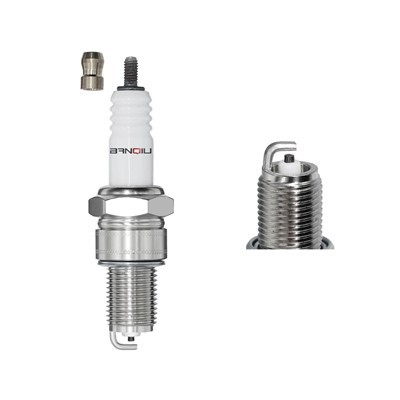
Spark plugs are also installed in the cylinder head, but their design is centered around producing a strong and reliable spark. They have a central electrode and a ground electrode, separated by a small gap. The spark jumps across this gap when a high - voltage electrical pulse is sent to the plug.
Operating Temperature
Glow plugs operate at relatively lower electrical power levels compared to the high - voltage requirements of spark plugs. They typically heat up to around 700 - 1000 degrees Celsius, just enough to pre - heat the diesel combustion chamber.
Spark plugs, however, need to handle much higher voltage, often in the range of 10,000 to 30,000 volts, to create a spark that can ignite the gasoline - air mixture. The temperature around the spark gap can reach extremely high levels, up to 6000 degrees Fahrenheit (about 3315 degrees Celsius) during the spark event.
Durability and Lifespan
Glow plugs can last a long time, but their lifespan can be affected by factors like frequent cold starts and the quality of the engine oil. Over time, the heating element can wear out, reducing its ability to heat up effectively.
Spark plugs have different lifespans depending on their type. For instance, Nickel Spark Plug A - 8 1210, which is a nickel - based spark plug, usually has a shorter lifespan compared to more advanced types. Nickel spark plugs are cost - effective but need to be replaced more often, typically every 20,000 - 30,000 miles.
Iridium Platinum Spark Plug IZFR6K11 6994 is a high - end option. The iridium and platinum materials are extremely durable. These spark plugs can last up to 100,000 miles or more, providing consistent performance over a long period.
Another nickel spark plug, the Nickel Spark Plug R0045G - 11 3191, is great for engines that don't require the high - end performance of iridium or platinum plugs. It offers decent performance at an affordable price and is suitable for many everyday applications.
Maintenance
Maintenance for glow plugs is relatively simple. In most cases, you just need to check if they're heating up properly. You can do this using a multimeter to measure the resistance. If the resistance is outside the recommended range, it's time to replace the glow plug.
Spark plug maintenance involves checking the gap between the electrodes regularly. The gap can change over time due to wear and tear, which can affect the performance of the spark. Adjusting or replacing spark plugs at the right intervals is crucial for maintaining engine performance and fuel efficiency.
As a spark plug supplier, I understand that choosing the right spark plug for your engine is vital. Whether you're looking for an affordable option like the nickel spark plugs or a long - lasting solution like the iridium platinum ones, we've got you covered.
If you're in the market for high - quality spark plugs, we can offer a wide range to meet your needs. We strive to provide products that ensure optimal engine performance, better fuel economy, and durability.
If you're interested in learning more about our spark plug options or have any questions about choosing the right one for your vehicle, don't hesitate to reach out. We'd love to have a chat and help you find the perfect fit for your engine needs. Let's start a great partnership and keep your engines running smoothly.
References
- Heywood, J. B. (1988). Internal Combustion Engine Fundamentals. McGraw - Hill.
- Bosich, C. J. (2003). Automotive Technology: Principles, Diagnosis, and Service. Cengage Learning.
- Taylor, C. F. (1960). The Internal - Combustion Engine in Theory and Practice. MIT Press.