

Found in any gas-fueled combustion engine, a spark plug is a component that screws into the engine's cylinder head. Spark plugs have high voltage electricity sent to one end and ignite a spark at the other end. The spark fires the air and fuel mixture within the engine and creates the combustion that powers your car. Without spark plugs, your car will not start.
What are the different materials that spark plugs are made of?
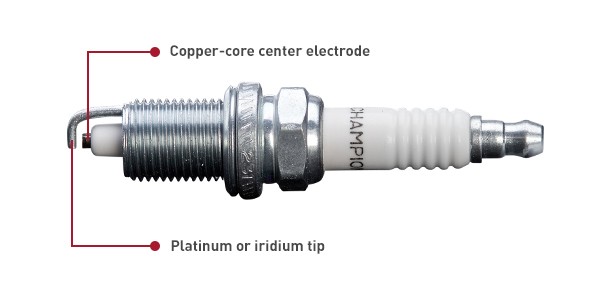
The majority of spark plugs feature a copper-core center electrode. Copper is an excellent conductor of electricity – better than any other type of material used in spark plugs – and also transfers heat faster. However, copper is soft and has a low melting point so it is always covered with a nickel alloy to protect it. Depending on the plug type, it can have a platinum or iridium tip on the electrodes to optimize performance.
What is the purpose of metal in a spark plug?
Manufacturers use precious and other metals in the center and side electrodes of a spark plug. The metal channels the high voltage from the spark plug wire through the spark plug so it can spark when it goes across the small gap between the central electrode and the side electrode. This is the vital spark that starts the combustion process.
The use of metals like nickel alloy, platinum and iridium reduces the wear caused by high voltage sparks. These metals also help extend the interval between spark plug changes and decrease the misfire rate.


