

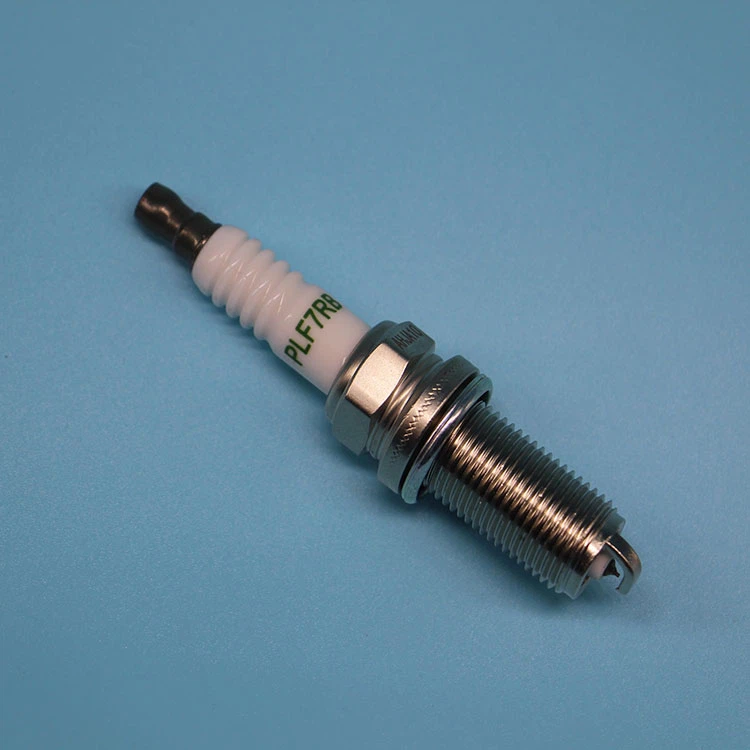
Replacing your spark plugs ensures that you have a consistent spark for combustion, meaning that your car will start reliably and that your fuel economy will remain optimal.
Spark plugs ignite the fuel in petrol-powered cars, but they have a finite life expectancy. They gradually wear out and should be replaced as part of your service plan.
Once you have the right tools, changing your spark plugs is a simple job that you can complete within an hour to avoid heavy car service costs.
Which Tools do I Need to Replace my Spark Plugs?
Regularly servicing your spark plugs will keep your engine in top condition. To replace your spark plugs, you will need:
A feeler gauge
A spark plug extension
A socket/ratchet wrench set
A torque wrench (optional)
Anti-seize lubricant (optional)
Rubber hose or rubber gloves to protect against grease/engine dirt and provide grip (optional)
9 Steps to Change Your Spark Plugs
Disclaimer: Every vehicle is different. This is a general guide.
Step One: Preparation
Turn the ignition off and ensure that the engine is cold before you begin.
Open the bonnet and disconnect the cable from the negative terminal of the battery – this is an important safety measure. Remove the air cleaner and any plastic casing that is protecting the spark plugs. These will be at the top of the engine.
Step Two: Spark Plug Gap
Your owner's manual will detail the optimum gap for your spark plugs – you won't have to gap the plugs yourself, as spark plugs are now manufactured to meet each model's specification.
However, to be certain that your new spark plugs have the correct gap, you can use a feeler gauge to measure (and alter) yours.
Step Three: Identify Your Spark Plugs
On a four-cylinder engine, the plugs will either be located on the side or the top of the engine head. Meanwhile, spark plugs are separated evenly on either side of V6 and V8-cylinder engines.
Your owner's manual will clarify both where the spark plugs are on your model and how many you need. Most vehicles have between four and twelve spark plugs. Typically, there is one spark plug for each cylinder, though some models use two per cylinder. Either way, it's important to replace all of the plugs at the same time as similar levels of electrical resistance allow optimal performance.
Step Four: Remove the Spark Plug Caps
Disconnect the ignition coil electrical connectors (spark plug caps), checking each for damage.
Label the coils to keep them in the correct order for when you re-attach them.
Step Five: Clean Up
Clean any debris away from the spark plug area in case any dirt or dust should fall into the cylinder once you have removed the old spark plugs.
Step Six: Remove the Old Spark Plugs
Remove the spark plugs one at a time using a spark plug extension and socket set. Grip each plug as near to the base as possible, gently turning in an anti-clockwise direction until it loosens. Be careful not to pull too hard, as this could damage the spark plug leads.
If there is any white build-up around the plug electrodes, if any parts of the electrodes have worn away or if there is any evidence of burning, it is particularly important that you replace your spark plugs.
Step Seven: Lubricate the Spark Plugs
Lubricate your new spark plugs with a small amount of anti-seize lubricant to stop them sticking next time you need to replace/check them. This lubricant can also prevent a reaction between dissimilar metals.
Step Eight: Insert the New Spark Plugs
You may like to slip a short length of rubber hose over the plugs to increase grip as you tighten your spark plugs.
Push the wire end of each spark plug into place and screw each in by hand. If you have a torque wrench, you can torque your plugs to spec – you'll find the torque specification for your model in your vehicle owner's guide.
Be sure to connect the new plugs to their original wires – spark plugs fire in an exact order, and mismatching wires can prevent the engine from running properly, potentially leading to long-lasting damage.
Step Nine: Finishing Up
Refit the ignition coil connectors, tighten any mounting bolts and replace any plastic casing that you had to remove earlier.


