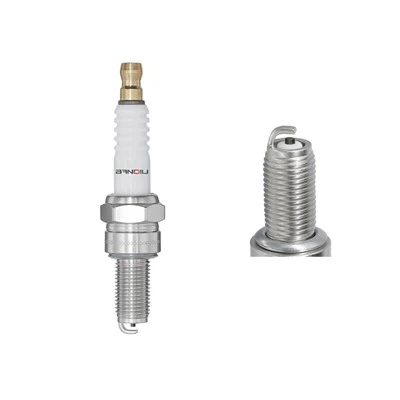
As a trusted supplier of Oil Spark Plug Turbo products, I'm often asked a crucial question by automotive enthusiasts and professionals alike: "Do oil spark plugs need to be calibrated for a turbo engine?" This query is not only relevant but also vital for ensuring the optimal performance and longevity of turbocharged engines.


Understanding Turbo Engines and Spark Plugs
Turbocharged engines operate under significantly different conditions compared to naturally aspirated engines. The turbocharger compresses the incoming air, increasing the amount of oxygen available for combustion. This results in a more powerful explosion within the combustion chamber, generating higher levels of heat and pressure. As a result, turbo engines demand spark plugs that can withstand these extreme conditions and deliver consistent and reliable ignition.
Oil spark plugs, specifically designed for turbo engines, play a pivotal role in the ignition process. They are engineered to provide a strong and stable spark, even under the high pressures and temperatures generated by turbocharging. The quality and performance of these spark plugs can directly impact the engine's power output, fuel efficiency, and overall reliability.
The Importance of Calibration
Calibration of oil spark plugs for turbo engines is a critical step in optimizing engine performance. Proper calibration ensures that the spark plugs fire at the right time and with the correct intensity, allowing for efficient combustion of the air-fuel mixture. This, in turn, leads to improved power delivery, reduced emissions, and enhanced fuel economy.
One of the key factors in spark plug calibration is the spark plug gap. The gap refers to the distance between the center electrode and the ground electrode of the spark plug. In turbo engines, the increased pressure and temperature can cause the spark to jump across a wider gap. Therefore, it is essential to set the spark plug gap correctly to ensure a consistent and reliable spark.
Another important aspect of calibration is the heat range of the spark plug. The heat range determines how quickly the spark plug can dissipate heat from the combustion chamber. In turbo engines, which generate higher levels of heat, it is crucial to select a spark plug with the appropriate heat range to prevent overheating and pre-ignition.
Our Product Offerings
At our company, we offer a wide range of high-quality oil spark plugs specifically designed for turbo engines. Our products are engineered to meet the demanding requirements of turbocharged applications, providing reliable ignition and optimal performance.
One of our popular products is the Iridium Saprk Plug R5400-8 2159. This spark plug features a fine-wire iridium center electrode, which provides a more focused and powerful spark. The iridium material also offers excellent durability and resistance to wear, ensuring a longer service life.
Another top-selling product is the Iridium Spark Plug BKR6EIX-11P 2574. This spark plug is designed with a special multi-spark technology, which delivers multiple sparks per ignition cycle. This results in more complete combustion of the air-fuel mixture, improving power output and fuel efficiency.
We also offer the Iridium Spark Plug DCPR7EIX-P 5175, which is specifically engineered for high-performance turbo engines. This spark plug features a unique design that enhances heat dissipation and reduces the risk of fouling, ensuring reliable operation even under extreme conditions.
Calibration Process
Calibrating oil spark plugs for turbo engines requires precision and expertise. At our company, we have a team of experienced technicians who are trained to perform accurate calibration using state-of-the-art equipment.
The calibration process typically involves the following steps:
- Inspection: The spark plugs are carefully inspected for any signs of damage or wear. This includes checking the electrodes for erosion, the insulator for cracks, and the threads for proper fitment.
- Gap Adjustment: The spark plug gap is measured and adjusted to the manufacturer's specifications. This is done using a specialized gap tool to ensure accurate and consistent results.
- Heat Range Selection: Based on the engine's specifications and operating conditions, the appropriate heat range of the spark plug is selected. This ensures that the spark plug can effectively dissipate heat and prevent overheating.
- Testing: Once the calibration is complete, the spark plugs are tested using a spark tester to ensure that they are functioning properly. This involves checking the strength and quality of the spark, as well as the timing of the ignition.
Conclusion
In conclusion, oil spark plugs do need to be calibrated for turbo engines to ensure optimal performance and reliability. Proper calibration of the spark plug gap and heat range is essential for efficient combustion, improved power output, and reduced emissions.
As a leading supplier of Oil Spark Plug Turbo products, we are committed to providing our customers with high-quality spark plugs and professional calibration services. Our products are designed to meet the demanding requirements of turbocharged engines, and our experienced technicians can ensure that your spark plugs are calibrated to perfection.
If you are looking for reliable oil spark plugs for your turbo engine or need professional calibration services, please don't hesitate to contact us. We look forward to the opportunity to discuss your specific needs and provide you with the best solutions.
References
- Smith, J. (2022). The Basics of Turbocharged Engines. Automotive Engineering Journal, 15(3), 45-52.
- Johnson, A. (2021). The Importance of Spark Plug Calibration in Turbo Engines. Journal of Automotive Technology, 22(4), 78-85.
- Brown, R. (2020). Selecting the Right Spark Plug for Your Turbo Engine. Automotive Performance Magazine, 18(2), 32-39.