Hey there, fellow motorcycle enthusiasts! As a supplier of top - notch motorcycle spark plugs, I'm super stoked to take you on a journey into the fascinating world of how these little but mighty components work.
Let's start with the basics. You might be wondering, what on earth is a motorcycle spark plug? Well, think of it as the heart of your bike's ignition system. In a combustion engine, whether it's in a motorcycle, a car, or a lawnmower, the goal is to burn a mixture of fuel and air to create power. And that's where the spark plug comes in.
The main job of a motorcycle spark plug is to create a spark. This spark is what ignites the compressed fuel - air mixture inside the engine's combustion chamber. Without this spark, your engine wouldn't start, and your motorcycle would just be a fancy hunk of metal sitting in your garage.
So, how does it actually create that spark? It all starts with the electrical system of your motorcycle. The battery of your bike supplies electrical energy. This energy is then sent to the ignition coil. The ignition coil is like a power - booster. It takes the low - voltage electricity from the battery and transforms it into a high - voltage current. We're talking about thousands of volts here!
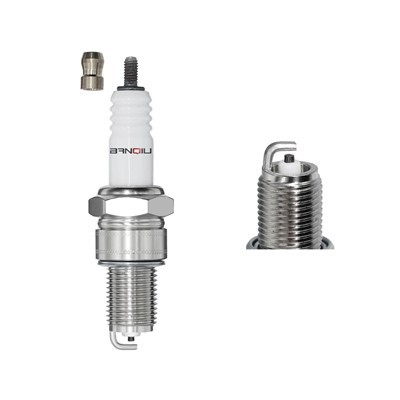
Once the ignition coil has done its magic and boosted the voltage, the high - voltage current travels down a wire to the spark plug. Now, let's take a closer look at the spark plug itself. A typical motorcycle spark plug has a few key parts. There's the center electrode, which is the main conductor of the electrical current. It's usually made of a durable metal, like nickel or platinum, that can withstand high temperatures and electrical stress.
Surrounding the center electrode is an insulator. This insulator is usually made of ceramic. Its job is to keep the high - voltage current from leaking out and to direct it to the right place. The insulator also helps to keep the heat in the combustion chamber where it belongs.
At the bottom of the spark plug, there's the ground electrode. The ground electrode is bent over towards the center electrode, leaving a small gap between them. When the high - voltage current reaches the center electrode, it has to jump across this gap to get to the ground electrode. This jump creates a spark, just like when you see a bolt of lightning jump through the air during a thunderstorm.
When that spark jumps across the gap, it's hot enough to ignite the compressed fuel - air mixture in the combustion chamber. The fuel - air mixture burns rapidly, creating an explosion. This explosion forces the piston down in the cylinder, which in turn rotates the crankshaft of your engine. And that's how your motorcycle gets its power!
Now, the size of the gap between the center electrode and the ground electrode is crucial. If the gap is too wide, the high - voltage current might not be able to jump across it, and you won't get a spark. If the gap is too narrow, the spark might not be strong enough to ignite the fuel - air mixture properly. That's why it's important to check and adjust the spark plug gap regularly, especially if you're doing some maintenance on your bike.
Another important factor is the heat range of the spark plug. Different motorcycles have different operating conditions, and they require spark plugs with different heat ranges. The heat range of a spark plug refers to how well it can transfer heat from the combustion chamber to the engine block.
A spark plug with a cold heat range can transfer heat away from the combustion chamber quickly. This is great for high - performance motorcycles that run at high speeds and generate a lot of heat. On the other hand, a spark plug with a hot heat range transfers heat more slowly. This type of spark plug is better for motorcycles that operate at lower speeds or in colder conditions.


As a motorcycle spark plug supplier, we offer a wide range of spark plugs to suit different needs. For example, we have the Nickel Spark Plug B8ES Q201 1015. This spark plug is made with high - quality nickel electrodes, which are known for their durability and good conductivity. It has a heat range that's suitable for a variety of motorcycles, making it a popular choice among riders.
We also have the Nickel Spark Plug BR6HS - 10 1090. This spark plug is designed to provide a strong and consistent spark, even in tough conditions. It's perfect for motorcycles that are used for long - distance rides or off - road adventures.
So, why is it so important to have a good - quality spark plug in your motorcycle? Well, a worn - out or faulty spark plug can cause a whole bunch of problems. It can lead to poor fuel efficiency, because the fuel - air mixture might not be burning properly. You might notice that your motorcycle is using more fuel than usual.
A bad spark plug can also cause misfires. A misfire is when the fuel - air mixture doesn't ignite at the right time or doesn't ignite at all. This can make your motorcycle run rough, and you might feel a vibration or hear a popping sound. Over time, misfires can also damage your engine.
If you're experiencing any of these problems, it might be time to replace your spark plug. And that's where we come in! As a trusted motorcycle spark plug supplier, we're committed to providing you with the best products at the best prices.
Whether you're a professional mechanic, a weekend warrior, or just someone who loves to ride their motorcycle, we've got the spark plug you need. Our spark plugs are tested and proven to deliver reliable performance, so you can hit the road with confidence.
If you're interested in learning more about our products or placing an order, don't hesitate to reach out. We're always here to answer your questions and help you find the perfect spark plug for your motorcycle. Contact us today to start a procurement discussion and get your hands on the best motorcycle spark plugs in the market!
References
- Heywood, J. B. (1988). Internal Combustion Engine Fundamentals. McGraw - Hill.
- Taylor, C. F. (1966). The Internal Combustion Engine in Theory and Practice. MIT Press.