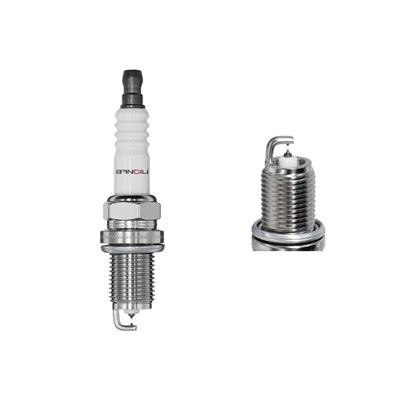
The heat range of spark plugs is a critical factor that significantly influences the performance of an engine. As a leading supplier of performance spark plugs, I've witnessed firsthand how the right heat range can transform an engine's efficiency, power output, and overall reliability. In this blog, I'll delve into the science behind heat ranges and explain how they affect the performance of spark plugs.
Understanding the Heat Range
The heat range of a spark plug refers to its ability to dissipate heat from the firing end to the engine's cooling system. It is a measure of how hot or cold the spark plug tip will operate under normal engine conditions. A spark plug with a high heat range will run hotter, while one with a low heat range will run cooler.
The heat range is determined by the design of the spark plug, specifically the length and material of the insulator nose. A longer insulator nose allows more heat to be transferred from the tip to the engine block, resulting in a lower heat range. Conversely, a shorter insulator nose restricts heat transfer, causing the spark plug to run hotter.
How Heat Range Affects Spark Plug Performance
The heat range of a spark plug plays a crucial role in several aspects of engine performance:
Combustion Efficiency
The right heat range ensures that the spark plug tip remains at an optimal temperature for efficient combustion. If the spark plug runs too hot, it can cause pre - ignition, where the air - fuel mixture ignites before the spark plug fires. This can lead to engine knocking, reduced power, and increased fuel consumption. On the other hand, if the spark plug runs too cold, it may not be able to burn off carbon deposits, leading to fouling and misfires.
For example, in a high - performance engine that generates a lot of heat, a spark plug with a lower heat range is required to prevent pre - ignition. In contrast, a lower - performance engine may need a spark plug with a higher heat range to ensure proper combustion and prevent fouling.
Engine Power
The heat range can also impact engine power. A spark plug operating at the correct heat range provides a consistent and strong spark, which leads to more complete combustion of the air - fuel mixture. This results in increased power output and better throttle response. When the spark plug runs too hot or too cold, the combustion process is less efficient, and power is lost.
Durability
Spark plugs operating within the appropriate heat range have a longer lifespan. If a spark plug runs too hot, the electrodes can erode quickly, reducing the spark plug's effectiveness and requiring more frequent replacement. A spark plug that runs too cold is more prone to fouling, which can also shorten its lifespan.


Selecting the Right Heat Range
Selecting the right heat range for your engine depends on several factors, including the engine's design, operating conditions, and performance requirements. Here are some general guidelines:
Engine Type
High - performance engines, such as those in sports cars or racing vehicles, typically require spark plugs with a lower heat range. These engines generate more heat due to higher compression ratios and increased power output. On the other hand, standard passenger cars and light - duty trucks may use spark plugs with a higher heat range.
Operating Conditions
If your engine is frequently used in stop - and - go traffic or for short trips, a spark plug with a higher heat range may be more suitable. This helps prevent fouling caused by incomplete combustion. For engines that are used for long - distance driving or high - speed cruising, a lower heat range spark plug may be necessary to handle the increased heat.
Performance Modifications
If you've made performance modifications to your engine, such as installing a turbocharger or supercharger, you may need to adjust the heat range of your spark plugs. These modifications increase the engine's power output and heat generation, so a lower heat range spark plug is often required.
Our Performance Spark Plug Offerings
As a performance spark plug supplier, we offer a wide range of spark plugs with different heat ranges to meet the needs of various engines. Here are some of our popular products:
- Nickel Spark Plug BKR5E - N - 11 2391: This spark plug is designed for a variety of engines and offers a balanced heat range suitable for normal driving conditions.
- Nickel Spark Plug BCP6ET 4563: Ideal for engines with moderate performance requirements, this spark plug provides reliable ignition and efficient combustion.
- Nickel Spark Plug BR6EB - L - 11 7028: With a lower heat range, this spark plug is suitable for high - performance engines that generate a significant amount of heat.
Conclusion
The heat range of a spark plug is a vital factor that can have a profound impact on engine performance. By understanding how heat range affects spark plug performance and selecting the right spark plug for your engine, you can improve combustion efficiency, increase power output, and enhance the durability of your engine.
If you're looking for high - quality performance spark plugs, we're here to help. Our team of experts can assist you in choosing the right spark plugs for your specific engine and application. Contact us today to start a discussion about your spark plug needs and take your engine's performance to the next level.
References
- Heywood, J. B. (1988). Internal Combustion Engine Fundamentals. McGraw - Hill.
- Taylor, C. F. (1985). The Internal Combustion Engine in Theory and Practice. MIT Press.