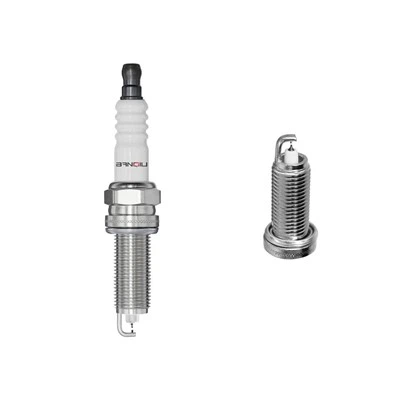
Installing a platinum spark plug can significantly enhance your vehicle's performance, fuel efficiency, and overall reliability. As a trusted platinum spark plug supplier, I'm here to guide you through the process and highlight the essential tools you'll need for a successful installation.
Why Choose Platinum Spark Plugs?
Before delving into the installation tools, let's briefly discuss why platinum spark plugs are a popular choice among vehicle owners. Platinum is a precious metal known for its exceptional durability and high melting point. When used in spark plugs, platinum electrodes can withstand extreme temperatures and electrical stresses, resulting in a longer service life compared to conventional copper spark plugs.
Platinum spark plugs also offer improved ignition performance, which can lead to smoother engine operation, better fuel economy, and reduced emissions. They are particularly well-suited for modern engines with high compression ratios and advanced ignition systems.
Essential Tools for Installing Platinum Spark Plugs
To install platinum spark plugs correctly, you'll need the following tools:


- Spark Plug Socket: A spark plug socket is a specialized socket designed to fit over the spark plug and provide a secure grip. It typically has a rubber insert to hold the spark plug in place during removal and installation. Make sure to choose a socket that matches the size of your vehicle's spark plugs. Most spark plugs use a 5/8-inch or 13/16-inch socket, but it's always a good idea to check your vehicle's owner's manual to confirm the correct size.
- Ratchet: A ratchet is a hand tool used to turn the spark plug socket. It allows you to apply torque in one direction while preventing the socket from turning in the opposite direction. Choose a ratchet with a comfortable grip and a smooth ratcheting action. A 3/8-inch drive ratchet is a common choice for spark plug installation, but a 1/4-inch drive ratchet may be more suitable for smaller engines.
- Extension Bar: An extension bar is used to reach spark plugs that are located in hard-to-reach areas. It attaches to the ratchet and provides additional length, allowing you to access spark plugs that are deep within the engine compartment. Choose an extension bar that is long enough to reach the spark plugs but not so long that it becomes difficult to control.
- Torque Wrench: A torque wrench is a precision tool used to apply a specific amount of torque to the spark plugs. Over-tightening or under-tightening the spark plugs can cause damage to the engine or result in poor performance. Using a torque wrench ensures that the spark plugs are tightened to the manufacturer's specifications. Refer to your vehicle's owner's manual for the recommended torque value for your spark plugs.
- Spark Plug Gap Tool: A spark plug gap tool is used to measure and adjust the gap between the center electrode and the ground electrode of the spark plug. The gap size is critical for proper ignition and engine performance. Most platinum spark plugs come pre-gapped, but it's still a good idea to check the gap before installation. Use a feeler gauge or a gap tool to measure the gap and adjust it if necessary.
- Dielectric Grease: Dielectric grease is a non-conductive grease that is applied to the spark plug boot to prevent moisture and corrosion from entering the spark plug well. It also helps to improve the electrical connection between the spark plug and the ignition wire. Apply a small amount of dielectric grease to the inside of the spark plug boot before installing it on the spark plug.
- Cleaning Brush: A cleaning brush is used to remove any dirt, debris, or carbon deposits from the spark plug well and the surrounding area before installing the new spark plugs. Use a soft-bristled brush to avoid damaging the engine components.
Step-by-Step Guide to Installing Platinum Spark Plugs
Now that you have the necessary tools, here's a step-by-step guide to installing platinum spark plugs:
- Prepare Your Vehicle: Start by parking your vehicle on a flat, level surface and turning off the engine. Allow the engine to cool down completely before proceeding.
- Locate the Spark Plugs: Refer to your vehicle's owner's manual to locate the spark plugs. In most cases, the spark plugs are located on the top or side of the engine block.
- Remove the Ignition Wires: Carefully remove the ignition wires from the spark plugs. To do this, grasp the boot firmly and pull it straight out. Avoid pulling on the wire itself, as this can damage the wire or the connection.
- Remove the Old Spark Plugs: Attach the spark plug socket to the ratchet and insert it over the spark plug. Turn the ratchet counterclockwise to loosen the spark plug. Once the spark plug is loose, remove it from the engine block by hand.
- Inspect the Old Spark Plugs: Take a close look at the old spark plugs to see if there are any signs of wear, damage, or fouling. If the spark plugs are worn or damaged, it's a good idea to replace them all at once.
- Check and Adjust the Spark Plug Gap: Use a spark plug gap tool to measure the gap between the center electrode and the ground electrode of the new spark plugs. If the gap is not within the manufacturer's specifications, adjust it using the gap tool.
- Apply Dielectric Grease: Apply a small amount of dielectric grease to the inside of the spark plug boot. This will help to prevent moisture and corrosion from entering the spark plug well and improve the electrical connection between the spark plug and the ignition wire.
- Install the New Spark Plugs: Insert the new spark plug into the spark plug socket and carefully thread it into the engine block by hand. Once the spark plug is hand-tight, use the torque wrench to tighten it to the manufacturer's specifications.
- Reattach the Ignition Wires: Carefully reattach the ignition wires to the new spark plugs. Make sure the wires are securely seated on the spark plugs and that there are no loose connections.
- Repeat the Process: Repeat steps 3-9 for each spark plug in your vehicle.
- Start the Engine: Once all the spark plugs are installed, start the engine and listen for any unusual noises or vibrations. If the engine runs smoothly, you've successfully installed the platinum spark plugs.
Recommended Platinum Spark Plugs
As a platinum spark plug supplier, we offer a wide range of high-quality platinum spark plugs to suit different vehicle makes and models. Here are some of our recommended products:
- Platinum Spark Plug PFR6B-11C 2684: This platinum spark plug is designed for use in a variety of vehicles and offers excellent ignition performance and durability.
- Platinum Spark Plug PZFR5D-11', 'V-Line 34', 'VL34 1664: This platinum spark plug features a V-line design for improved ignition and fuel efficiency. It is suitable for use in high-performance engines.
- Platinum Spark Plug PFR8B 2781: This platinum spark plug is designed for use in engines with high compression ratios and advanced ignition systems. It offers reliable performance and long service life.
Contact Us for Purchasing
If you're interested in purchasing platinum spark plugs or have any questions about installation, feel free to contact us. Our team of experts is here to help you find the right spark plugs for your vehicle and provide you with the support you need for a successful installation.
References
- "Automotive Spark Plug Guide." AutoZone.
- "How to Replace Spark Plugs." YourMechanic.
- "Spark Plug Installation Tips." NGK Spark Plugs.