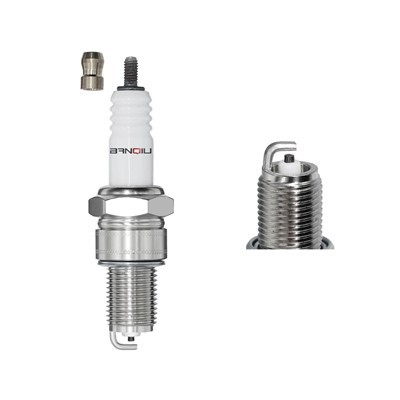
Let's talk about something that might seem a bit technical but is super important when it comes to platinum spark plugs – can the cost of platinum spark plugs vary depending on the plug's heat range? As a supplier of platinum spark plugs, I've seen a lot of questions around this, so I'm here to break it down in simple terms.
First off, what even is the heat range of a spark plug? Well, the heat range is basically a measure of how quickly a spark plug can transfer heat from its firing end to the engine's cooling system. A spark plug with a hot heat range will retain more heat, which is great for cold-start situations or engines that run at low speeds and loads. On the other hand, a plug with a cold heat range will dissipate heat faster, making it ideal for high-performance engines that generate a lot of heat, like those in race cars or turbocharged vehicles.


Now, back to the big question – does the heat range affect the cost? The short answer is yes, it does. And there are a few reasons for that.
One of the main factors is the materials used. Spark plugs with different heat ranges often require different materials to achieve the right balance of heat transfer and durability. For example, a hot-range spark plug might need materials that can withstand the higher temperatures it will be exposed to for longer periods. These materials can be more expensive to source and manufacture, which in turn drives up the cost of the spark plug.
Another reason is the manufacturing process. Producing spark plugs with specific heat ranges can be more complicated and time-consuming. The manufacturers need to ensure that each plug has the exact heat transfer characteristics required for its intended heat range. This involves more precise machining, quality control, and testing. All these extra steps add to the production cost, and that cost is passed on to the consumer.
Let's take a look at some real-world examples. I'm a supplier of different platinum spark plugs, and I've noticed a clear difference in prices based on the heat range. The Platinum Spark Plug PFR6Q', 'V - Line 37', 'VL37 5773 is designed for a moderate heat range. It's suitable for a wide range of regular passenger cars that operate under normal driving conditions. Because it's in this middle-ground when it comes to heat range, it doesn't require the most expensive materials or the most complex manufacturing processes. So, it has a relatively reasonable price point.
On the other hand, the Platinum Spark Plug PFR7B - D 2776 has a colder heat range. This plug is often used in high-performance engines that generate a lot of heat. It needs to be able to dissipate that heat quickly to prevent pre - ignition and other engine problems. To achieve this, it's made with special materials and goes through a more rigorous manufacturing process. As a result, it's priced higher than the PFR6Q.
And then there's the Platinum Spark Plug PGR6D 6248. This one has a hotter heat range. It's designed for engines that might have a hard time starting in cold conditions or operate mostly at low speeds. The materials used in this plug are optimized to retain heat, and the manufacturing process is tailored to ensure that it can maintain the right temperature for smooth engine operation. This also contributes to a higher cost compared to some other spark plugs in our lineup.
It's not just about the materials and manufacturing, though. Market demand also plays a role in the pricing. If there's a high demand for a particular heat range of spark plugs, the price might go up. For example, with the growing popularity of turbocharged engines, the demand for cold-range spark plugs has increased. This higher demand can put upward pressure on the prices of these types of spark plugs.
So, as a consumer, how do you decide which heat range of platinum spark plug is right for you? Well, it all depends on your vehicle and how you use it. If you have a regular commuter car that you drive mostly in the city, a spark plug with a moderate heat range should do the trick. But if you have a high - performance vehicle or you're into racing, you'll definitely want to go for a cold - range spark plug. And if you live in a cold climate or have an engine that struggles with cold starts, a hot - range spark plug could be your best bet.
As a platinum spark plug supplier, I know that choosing the right spark plug can be a bit confusing. That's why I'm here to help. Whether you're a mechanic looking to stock up on the best spark plugs for your shop or a car enthusiast trying to get the most out of your ride, I can provide you with the information and the products you need.
If you're interested in learning more about our platinum spark plugs, their heat ranges, and their costs, don't hesitate to reach out. We're always happy to have a chat and help you find the perfect spark plugs for your engine. Contact us to start a discussion about your procurement needs and let's work together to get you the best deal on high - quality platinum spark plugs.
References:
- Automotive Engine Performance textbooks
- Industry reports on spark plug manufacturing and pricing
- Manufacturer documentation for platinum spark plugs