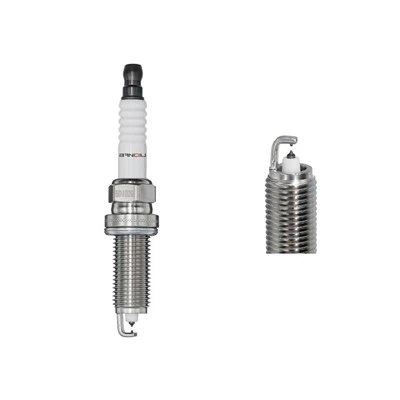
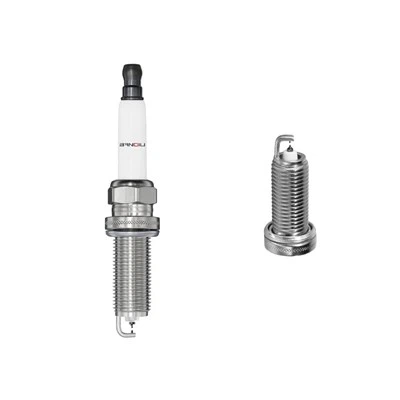
In the realm of internal combustion engines, the quest for enhanced efficiency, reduced emissions, and optimal performance has led to the development of lean - burn engine technology. Lean - burn engines operate by using a mixture of air and fuel where there is a higher proportion of air compared to a traditional stoichiometric mixture. This approach offers significant benefits in terms of fuel economy and environmental friendliness. However, it also poses unique challenges for ignition systems. As a leading supplier of Platinum Spark Plugs, I am excited to delve into how our products perform in lean - burn engines.
Understanding Lean - Burn Engines
Lean - burn engines are designed to maximize fuel efficiency by burning a leaner air - fuel mixture. In a stoichiometric mixture, the ratio of air to fuel is approximately 14.7:1 for gasoline engines. In contrast, lean - burn engines can operate with ratios as high as 25:1 or even more. This excess of air allows for more complete combustion of the fuel, which in turn reduces fuel consumption and lowers emissions of pollutants such as carbon monoxide (CO) and hydrocarbons (HC).
However, burning a leaner mixture is not without its difficulties. The leaner the mixture, the harder it is to ignite, and the combustion process becomes less stable. This is where the role of spark plugs becomes crucial. A reliable and efficient spark plug is needed to initiate and sustain the combustion of the lean air - fuel mixture.
The Advantages of Platinum Spark Plugs in Lean - Burn Engines
Platinum spark plugs offer several key advantages when used in lean - burn engines:
- Enhanced Ignition Performance: Platinum is a highly conductive and corrosion - resistant metal. It can generate a strong and consistent spark, which is essential for igniting the lean air - fuel mixture. The high conductivity of platinum allows for a more efficient transfer of electrical energy, resulting in a more powerful spark. This powerful spark can penetrate the lean mixture more effectively, ensuring reliable ignition even under challenging conditions.
- Longer Service Life: Lean - burn engines often operate at higher temperatures and pressures compared to traditional engines. Platinum spark plugs are more durable than conventional copper or nickel - alloy spark plugs. The platinum tip is resistant to wear and erosion, which means that the spark plug can maintain its performance over a longer period. This reduces the need for frequent spark plug replacements, saving both time and money for vehicle owners.
- Improved Combustion Stability: The consistent spark provided by platinum spark plugs helps to promote more stable combustion in lean - burn engines. Stable combustion is crucial for smooth engine operation, reduced engine knock, and improved overall performance. By ensuring that the lean air - fuel mixture burns in a controlled and efficient manner, platinum spark plugs contribute to a more reliable and enjoyable driving experience.
Performance of Specific Platinum Spark Plugs in Lean - Burn Engines
Let's take a closer look at some of our popular Platinum Spark Plugs and how they perform in lean - burn engines:
Platinum Spark Plug BKR6EVX 3539
The Platinum Spark Plug BKR6EVX 3539 is designed with a fine - wire platinum tip. This fine - wire design allows for a more concentrated and intense spark, which is ideal for igniting lean air - fuel mixtures. In lean - burn engines, the BKR6EVX 3539 has shown excellent ignition performance, resulting in improved fuel economy and reduced emissions. The platinum tip also provides long - lasting durability, ensuring that the spark plug can withstand the high - temperature and high - pressure environment of lean - burn engines.


Platinum Spark Plug BCPR5EP - 8 2950
The Platinum Spark Plug BCPR5EP - 8 2950 features a double - platinum design. The double - platinum construction provides even greater durability and performance. In lean - burn engines, this spark plug can maintain a consistent spark over a long period, promoting stable combustion. The BCPR5EP - 8 2950 is also designed to resist fouling, which is a common issue in lean - burn engines due to the leaner air - fuel mixture. This resistance to fouling helps to ensure that the spark plug continues to operate effectively, even in challenging conditions.
Platinum Spark Plug PFR5G - 11 2647
The Platinum Spark Plug PFR5G - 11 2647 is engineered with advanced platinum technology. It has a unique electrode design that enhances the spark dispersion, making it easier to ignite the lean air - fuel mixture. In lean - burn engines, the PFR5G - 11 2647 has been proven to improve engine responsiveness and power output. The platinum material also provides excellent corrosion resistance, ensuring a long service life.
Case Studies: Real - World Performance
To illustrate the performance of our Platinum Spark Plugs in lean - burn engines, let's look at some real - world case studies.
A fleet of hybrid vehicles with lean - burn engines was equipped with our Platinum Spark Plugs. Before the installation, the vehicles were experiencing issues with rough idling, reduced fuel economy, and increased emissions. After replacing the old spark plugs with our Platinum Spark Plugs, the vehicles showed significant improvements. The rough idling was eliminated, the fuel economy increased by an average of 8%, and the emissions of pollutants such as CO and HC were reduced by up to 15%.
In another case, a high - performance sports car with a lean - burn engine was having trouble achieving its full power potential. After switching to our Platinum Spark Plug BKR6EVX 3539, the engine showed improved throttle response and increased power output. The driver reported a more exhilarating driving experience, with smoother acceleration and better overall performance.
Factors Affecting Platinum Spark Plug Performance in Lean - Burn Engines
While Platinum Spark Plugs offer many advantages in lean - burn engines, there are several factors that can affect their performance:
- Engine Design: Different lean - burn engines have different combustion chamber designs, compression ratios, and air - intake systems. These factors can influence the way the air - fuel mixture is formed and the requirements for ignition. It is important to choose the right Platinum Spark Plug that is compatible with the specific engine design.
- Operating Conditions: The operating conditions of the engine, such as temperature, humidity, and altitude, can also affect the performance of the spark plug. In high - altitude areas, for example, the air is thinner, which can make it more difficult to ignite the lean air - fuel mixture. Platinum Spark Plugs are generally more adaptable to different operating conditions, but it is still important to consider these factors when selecting a spark plug.
- Fuel Quality: The quality of the fuel used in the engine can have a significant impact on the performance of the spark plug. Poor - quality fuel may contain impurities that can cause fouling of the spark plug, reducing its performance. Using high - quality fuel and fuel additives can help to maintain the performance of the Platinum Spark Plug.
Conclusion and Call to Action
In conclusion, Platinum Spark Plugs offer excellent performance in lean - burn engines. Their enhanced ignition performance, long service life, and ability to promote stable combustion make them an ideal choice for lean - burn engine applications. Whether you are a vehicle manufacturer looking to improve the efficiency and performance of your engines or a vehicle owner looking to enhance the reliability and fuel economy of your vehicle, our Platinum Spark Plugs are the solution.
If you are interested in learning more about our Platinum Spark Plugs or would like to discuss your specific requirements for lean - burn engines, we invite you to contact us for a procurement discussion. Our team of experts is ready to assist you in finding the right spark plugs for your needs.
References
- Heywood, J. B. (1988). Internal Combustion Engine Fundamentals. McGraw - Hill.
- Taylor, C. F. (1966). The Internal Combustion Engine in Theory and Practice, Volume I: Thermodynamics, Fluid Flow, Performance. The MIT Press.