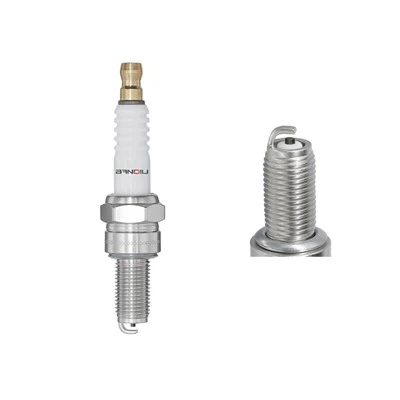
Hey there, fellow car enthusiasts! As a supplier of Oil Spark Plug Turbo products, I've seen firsthand the impact that a misfiring oil spark plug can have on a turbo engine's longevity. In this blog, I'm gonna break down the effects and why it's super important to keep your spark plugs in top - notch condition.
Let's first understand what a misfiring spark plug is. A spark plug is supposed to create a spark at the right time to ignite the air - fuel mixture in the engine's cylinders. When it misfires, it fails to do this properly. There could be a bunch of reasons for this, like wear and tear, carbon buildup, or even a problem with the ignition system.
Impact on Combustion Efficiency
One of the most immediate effects of a misfiring oil spark plug on a turbo engine is a drop in combustion efficiency. In a turbo engine, the turbocharger forces more air into the cylinders, which means more fuel can be burned to generate more power. But if the spark plug isn't firing correctly, the air - fuel mixture won't burn completely.
This incomplete combustion leads to a loss of power. You'll notice that your car doesn't accelerate as smoothly or as quickly as it used to. The engine might feel sluggish, and you'll have to press the accelerator harder to get the same level of performance. It's like trying to run a race with one shoe tied to your ankle – you're just not gonna be able to move as freely.
Moreover, incomplete combustion also leads to increased fuel consumption. When the fuel doesn't burn properly, your engine has to use more of it to try and achieve the same amount of power. This can really hit your wallet hard over time. You'll find yourself making more frequent trips to the gas station, and who wants that?
Stress on the Turbocharger
A misfiring spark plug can also put a lot of stress on the turbocharger. The turbocharger relies on the hot exhaust gases from the engine to spin its turbine and compress the incoming air. When the spark plug misfires, the combustion process is disrupted, and the exhaust gases can have inconsistent flow and temperature.
The inconsistent exhaust flow means that the turbocharger has to work harder to maintain its performance. This extra stress can cause premature wear and tear on the turbocharger's components, such as the turbine blades and the bearings. Over time, this can lead to turbocharger failure, which is a major and expensive repair.
The fluctuating temperature of the exhaust gases is also a problem. Turbochargers are designed to operate within a specific temperature range. If the exhaust gases are too hot or too cold due to misfiring, it can damage the turbocharger's internal parts. For example, excessive heat can cause the turbine blades to warp, while cold exhaust gases might not provide enough energy to spin the turbine effectively.
Engine Deposits and Carbon Buildup
Another consequence of a misfiring oil spark plug is increased engine deposits and carbon buildup. Incomplete combustion leaves behind unburned fuel and other by - products that can stick to the inside of the engine's cylinders, valves, and pistons. These deposits can act as insulators, reducing the engine's heat transfer efficiency and causing hot spots in the cylinders.
Carbon buildup can also cause problems with the engine's valves. The deposits can prevent the valves from closing properly, leading to a loss of compression in the cylinders. This further reduces the engine's performance and can cause rough idling and misfires in other cylinders as well.
Over time, the buildup of deposits can become so severe that it can cause permanent damage to the engine. It can lead to piston ring wear, valve seat erosion, and even engine knocking. Engine knocking is a serious issue that can cause catastrophic engine failure if not addressed promptly.
How to Prevent Misfiring and Extend Engine Longevity
Now that we know the negative effects of a misfiring oil spark plug on a turbo engine's longevity, let's talk about how to prevent it. The first step is to choose the right spark plug for your turbo engine. At our company, we offer a wide range of high - quality spark plugs, such as the Iridium Platinum Spark Plug ILZFR5B 6207, Iridium Platinum Spark Plug DILKAR7C9H 91215, and Iridium Platinum Spark Plug IZFR6K - 11S 5266. These spark plugs are made with high - quality materials, like iridium and platinum, which offer better durability and ignition performance.
Regular maintenance is also crucial. You should follow your vehicle manufacturer's recommended maintenance schedule for spark plug replacement. Generally, spark plugs should be replaced every 30,000 to 100,000 miles, depending on the type of spark plug and the engine.
In addition to replacing the spark plugs, you should also keep your engine clean. Using high - quality fuel and engine oil can help reduce the formation of deposits. You can also use fuel additives that are designed to clean the fuel system and prevent carbon buildup.


Conclusion
In conclusion, a misfiring oil spark plug can have a significant negative impact on a turbo engine's longevity. It can reduce combustion efficiency, put stress on the turbocharger, and cause engine deposits and carbon buildup. By choosing the right spark plug, like the ones we offer at our company, and following a regular maintenance schedule, you can prevent misfiring and keep your turbo engine running smoothly for years to come.
If you're interested in learning more about our Oil Spark Plug Turbo products or have any questions about spark plug selection and maintenance, don't hesitate to reach out. We're here to help you make the best choices for your engine and ensure its long - term health. Let's work together to keep your turbo engine in peak condition!
References
- Automotive Engine Design and Technology Handbook
- Turbocharger Technology and Maintenance Guide
- Spark Plug Manufacturer's Technical Documents